
Why AI Literacy Is Becoming a Core MBA Admission Criterion in 2026
A few years ago, business schools wanted to know about your leadership experience, your teamwork, your five-year plan. Now there’s a new question sitting quietly on top of all of that: how comfortable are you actually working with AI? I saw this play out at a case competition last year. The prompt was simple on paper — a mid-sized retailer wanted to cut delivery costs by 15% without upsetting customers. A decade ago, the winning team would have spent the first hour building a spreadsheet and arguing over assumptions. This time, the team that won had an AI tool open within the first ten minutes. They fed it real logistics data, had a rough demand-forecasting model running before the other teams had finished their outline, and spent the rest of their time on the part machines still can’t do — deciding what the numbers actually meant for the business. Everyone else was still building the model. They were already arguing about strategy. That’s the shift. And it’s why AI literacy has quietly moved from “nice to have” to something admissions committees are actually screening for. It’s Not Just a Vibe — the Data Backs It Up Business schools didn’t wake up one day and decide AI literacy sounds impressive on a brochure. They’re reacting to what employers are telling them, loudly. A striking number of employers now say AI proficiency isn’t a differentiator anymore it’s just assumed. You either have it, or you’re not really being considered for the role. And it’s not only about knowing how to use a chatbot. Employers want people who can use AI to interpret data, spot patterns, and turn that into an actual business decision. Strategic thinking is still king, but AI fluency is right behind it. Schools have picked up on this fast. Cambridge Judge Business School now gives its MBA students hands-on access to a range of AI tools as part of the core program, not an elective tucked away for the curious few. Other top programs are doing the same — treating AI the way schools once treated Excel: something you’re simply expected to know by the time you graduate. And it’s showing up in admissions, too. Harvard Business School, Kellogg, and London Business School now ask applicants to disclose how they used AI while writing their essays. That’s not schools being suspicious of you. It’s schools acknowledging that AI is already part of how people think and write — and they’d rather understand how you use it than pretend it doesn’t exist. Why You Should Actually Care About This Here’s the honest version: an MBA is supposed to tell an employer “This person can make good decisions and lead people.” In 2026, good decisions are increasingly made *with* AI in the room — whether that’s reading market data faster, catching a supply chain problem before it becomes expensive, or just running a team that already uses these tools every day. If your MBA doesn’t build that muscle, you leave with a gap employers are now actively testing for. That’s the real reason AI literacy is creeping into everything — admissions essays, core courses, even case competitions. What This Actually Looks Like: Amazon It’s easy to talk about “AI literacy” in the abstract. It’s more useful to look at a company that’s built its entire business around it. Take Amazon’s recommendation engine — the quiet “customers who bought this also bought…” feature sitting under almost every product page. It’s one of the most commercially successful AI applications in retail history, and a huge chunk of Amazon’s total sales trace back to it in some way. That’s not a research paper. That’s a system directly moving revenue, built purely on pattern recognition and customer data. Then there’s the warehouse floor. Amazon uses machine learning to forecast demand, decide where inventory should sit before anyone even orders it, and re-route delivery trucks in real time when traffic or weather gets in the way. Its warehouse robots use reinforcement learning to figure out the shortest path between two points — which sounds small until you multiply it across millions of packages a day. The result is lower inventory costs and faster deliveries, without a human re-planning the network every quarter. Alexa is the more visible piece — natural language processing doing the unglamorous work of understanding what you actually meant when you asked it something. But the real lesson for MBA students isn’t any single feature. It’s Amazon’s mindset. A better forecasting model built for the supply chain doesn’t just stay in the supply chain — it feeds the recommendation engine, which feeds Alexa, which feeds the next thing. Amazon’s own leadership has said nearly every business unit is running multiple generative AI projects at once. That’s not a tech team’s job. That’s a company-wide habit. And What It Looks Like at Google If Amazon shows how AI reshapes a supply chain, Google shows how it reshapes the ordinary workday — which is arguably more relevant to what most MBA graduates will actually do. Google didn’t build a separate AI chatbot and hope people remembered to open it. It put Gemini directly inside Gmail, Docs, Sheets, and Slides — the tools people already live in nine hours a day. It reads the context of an email thread or a messy spreadsheet and just acts on it: drafting the reply, summarizing the document, turning scattered notes into a table someone can actually use. The productivity numbers are hard to ignore. Companies that have rolled out Gemini across their workforce report real, measurable drops in time spent drafting documents and answering email — in some cases, several hours saved per employee, per week. That’s not a “cool AI feature” story. That’s a cost and efficiency story, which is exactly the language business school trains you to speak. There’s also a bigger shift underneath it: Google is moving from AI that just generates content to AI that acts — planning a task, executing several steps, pulling
The Importance of Lifelong Learning in Today’s Job Market (7 key takeaways)
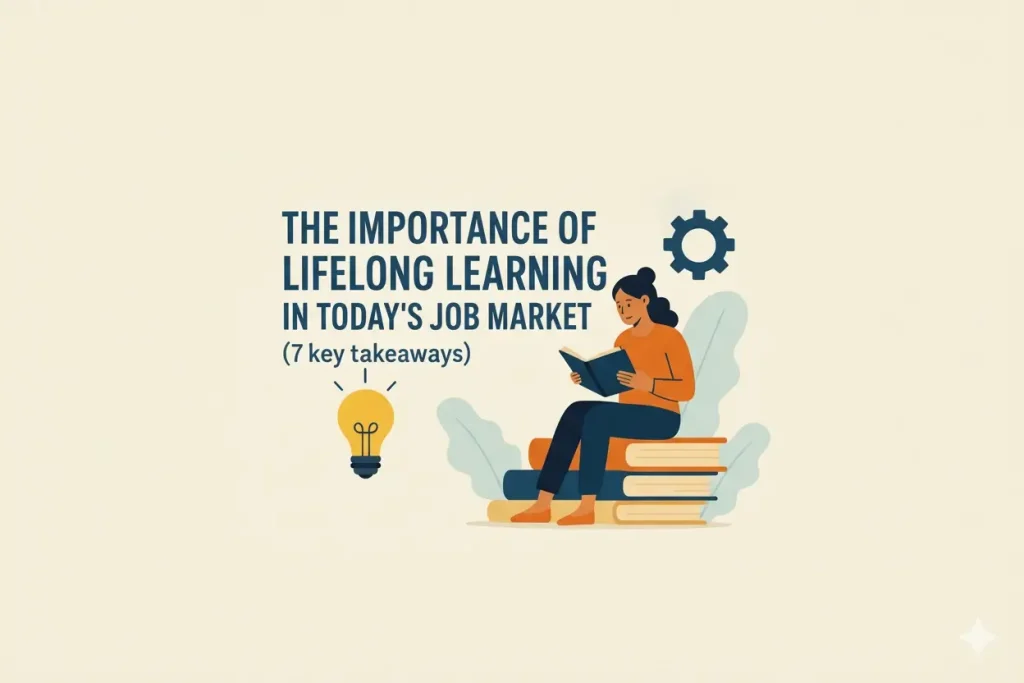
In today’s fast-paced, ever-evolving job market, one thing has become crystal clear: lifelong learning is no longer optional, it’s essential. Whether you’re climbing the corporate ladder, seeking a career change, or simply aiming to stay relevant in your field, continuous education plays a pivotal role in your professional journey. As an education counselor who has guided over 250+ students toward achieving their educational goals while maintaining their careers, I’ve seen firsthand how lifelong learning can unlock new opportunities, boost career satisfaction, and ultimately, elevate personal and professional growth. In this blog, we’ll explore why lifelong learning is more important than ever and how working professionals can seamlessly incorporate education into their busy lives without hitting pause on their careers. 1. Adapting to Rapid Industry ChangesThe workplace is changing at an unprecedented pace. Automation, artificial intelligence, digital transformation, and new business models are reshaping entire industries. For professionals to thrive, staying on top of industry trends and technological advancements is crucial. Lifelong learning helps you stay ahead of these changes. By continually upgrading your knowledge and skills, you ensure that you’re not just keeping up, but actively shaping the future of your career. Whether it’s pursuing a work-based MBA, taking specialized online courses, or engaging in industry workshops, these educational experiences allow you to adapt and remain competitive. 2. Building a Growth MindsetWhen it comes to career success, having a growth mindset can make all the difference. Professionals who view challenges as opportunities to learn and improve are more likely to push boundaries and reach their full potential. Lifelong learning fosters this mindset by constantly challenging individuals to think critically, embrace new concepts, and develop problem-solving skills. I’ve worked with countless professionals who initially felt unsure about leaping further education, especially those balancing work and family commitments. However, once they started, they found that learning new things not only boosted their confidence but also made them more adaptable in their roles. The ability to embrace new ideas, systems, and processes is invaluable in today’s rapidly changing job market. 3. Expanding Career OpportunitiesIn many industries, the more skills you acquire, the more career opportunities you unlock. Whether you want to climb the corporate ladder, transition into a new field, or secure a leadership position, lifelong learning gives you the qualifications and expertise you need to advance. Take, for example, the working professionals I’ve helped enroll in work-based MBAs. These students continue working full-time while pursuing their degrees, an ideal way to apply newly learned knowledge directly to their jobs. Many of They have gone on to secure promotions, switch careers, or launch their own businesses because their education allowed them to gain specialized skills and broaden their professional network. Moreover, certifications, specializations, and micro-credentials can also add tremendous value to your resume, signaling to employers that you are committed to personal and professional growth. 4. Improved Job Satisfaction and MotivationLifelong learning doesn’t just equip you with new skills; it also fuels your passion and motivation for your career. When you’re constantly learning, you’re less likely to feel stagnated or bored in your job. Instead, you’ll feel more engaged and inspired, which can have a positive impact on your productivity and job satisfaction. Professionals who invest in their education often report feeling more confident in their abilities, knowing they’re continually evolving. This increased confidence can lead to greater job satisfaction as well as a sense of fulfillment from knowing that you’re preparing for future opportunities. 5. Work-Based Education:A Flexible Solution for Busy Professionals. As someone who has guided over 250+ students in achieving their educational goals without pausing their careers, I can confidently say that work-based education programs, such as online MBAs or executive education programs, offer a flexible and practical way to balance work, life, and learning. These programs are designed for working professionals who want to advance their education without stepping away from their careers. Most of these programs allow you to study at your own pace, on your own time, and apply your new knowledge to real-world scenarios, which only enhances your learning experience. For example, an MBA program designed for working professionals will typically involve online modules, weekend classes, or evening sessions formats that allow you to continue your job while expanding your skillset in areas like leadership, strategy, finance, and marketing. By engaging in work-based education, professionals can develop both hard and soft skills that make them more valuable assets to their organizations. And the best part? They don’t have to sacrifice job stability or income to do it. 6. The Role of Mentorship in Lifelong Learning :Education isn’t just about textbooks and lectures. One of the greatest benefits of lifelong learning is the opportunity for mentorship and networking. Many educational programs, especially those targeting professionals, offer access to mentors seasoned experts who provide guidance, share industry insights, and help expand your professional network. As you pursue new educational avenues, take advantage of the mentorship opportunities that come with it. Whether through formal mentorship programs, peer-to-peer learning, or professional networking events, building relationships with like-minded individuals and experienced professionals can enhance both your learning and career trajectory. 7. Closing the Skills Gap:In many sectors, there is a significant skills gap that prevents companies from filling key roles. The good news is that you have the power to bridge that gap through targeted education. By identifying the skills that are in demand within your industry and pursuing relevant learning opportunities, you can position yourself as a highly sought-after professional. For example, digital literacy, data analysis, and project management are in-demand skills across industries. Pursuing courses in these areas can make a huge difference in your career, ensuring that you remain marketable and employable. Conclusion:Lifelong learning is the key to success in today’s fast-moving job market. Whether You’re looking to climb the corporate ladder, pivot to a new career, or simply stay relevant in your current field, investing in continuous education will give you the tools to adapt, grow, and thrive. If you’re a working professional who feels like you
From Ambition to Advancement: How Education Defines Modern Work Culture in the UAE

Introduction Over the past few decades, the United Arab Emirates has grown from a trade-driven nation into one of the most progressive business hubs in the world. Towering skyscrapers, multinational offices, and diverse workforces stand as symbols of the country’s extraordinary development. Behind this growth lies something deeper than infrastructure—a culture of ambition, learning, and adaptability. The UAE’s success story is powered not only by innovation but also by its people’s continuous pursuit of education and self-improvement. The Modern UAE Work Culture Work culture in the UAE reflects a balance between global professionalism and strong local values. Employees from across the world come together, sharing experiences and learning from each other. Corporate life here encourages collaboration, creative problem-solving, and personal development. As industries evolve, companies increasingly value employees who are not just skilled but also educated in leadership, management, and strategic thinking. The idea of learning while working has become essential to career advancement in the UAE’s dynamic business environment. When Education Becomes the Catalyst for Growth In today’s corporate world, degrees are more than credentials—they are stepping stones to leadership and respect. Professionals across the UAE are returning to academics to upgrade their knowledge, pursue higher qualifications, and redefine their positions in the corporate hierarchy. Many mid-career professionals now enroll in Doctor of Business Administration (DBA) programs—a qualification designed to bridge the gap between theory and real-world executive decision-making. Unlike traditional PhDs, DBA programs focus on practical business challenges, innovation, and leadership application—skills that directly influence corporate performance. This growing trend reveals a truth: education has become the new currency of career advancement. Those with advanced degrees not only gain a competitive edge but also earn recognition, credibility, and a stronger professional network. Global Institutes Leading the Way Across the globe, many universities offer reputable business and doctoral programs. Institutions such as London Business School (UK), INSEAD (France/Singapore), and Harvard Business School (USA) continue to produce some of the world’s most accomplished leaders. However, among the most innovative institutions of modern executive education, the Swiss School of Business and Management (SSBM) Geneva stands out as a top choice for professionals seeking flexibility, international exposure, and academic excellence. Known for its globally accredited DBA programs and modern learning approach, SSBM combines academic depth with real-world relevance—making it particularly appealing to UAE-based professionals who wish to pursue higher studies while balancing demanding careers. Its partnerships with industry experts, international faculty, and focus on leadership transformation make it one of the most progressive institutions in Europe and beyond. Balancing Ambition with Lifelong Learning Education in corporate life is no longer just about achieving a title—it’s about transforming how professionals think, lead, and create impact. The UAE’s workforce increasingly recognizes that the key to long-term success is a combination of knowledge, adaptability, and continuous learning. Whether it’s through short-term executive programs or advanced doctorates like the DBA, education continues to redefine how professionals grow within organizations and society. Conclusion: Learning as the Future of Leadership The UAE’s evolution into a global economic powerhouse reflects one clear truth—sustainable success depends on the pursuit of knowledge. Education is no longer a phase of life; it’s a continuous investment in self-development and leadership. As professionals in the UAE look toward global recognition and career advancement, institutions like the Swiss School of Business and Management, Geneva, set the benchmark for modern executive education—proving that learning is not just about progress, but about purpose. Because in today’s fast-paced corporate world, education doesn’t just change careers—it transforms futures.
Why Getting a Bachelor’s Degree Still Matters in 2025 — Even with Work Experience

Many experts question if a bachelor’s degree will still be required in 2025 in a world where skills, certifications, and practical experience are highly appreciated. Today, career growth often depends more on results than on degrees. Still, a bachelor’s degree is valuable, it can increase your earnings, boost your career, and open doors to opportunities abroad. Even for seasoned workers (Someone who is extremely knowledgeable and proficient in their profession, with years of practical experience and in-depth understanding) possessing a degree can help even meet overseas employment and visa requirements, gain admission to postgraduate schools, or be given consideration for leadership roles. Even if work experience is valuable, different countries or areas tend to value it differently. But a bachelor’s degree is a globally accepted qualification. For skilled worker categories, for instance, a bachelor’s degree is frequently listed as a requirement for visas in nations like Canada, Australia, and the United Arab Emirates. when it comes to the real-life scenario; Two experts apply for the same managerial job. Both have ten years of experience, great skills, and strong recommendations. But one of them does not have a bachelor’s degree. In most cases, the candidate with the degree will still have the upper hand. Here’s why that’s important in 2025. A bachelor’s degree builds on your real-world experience by giving you deeper knowledge and understanding. It helps you think beyond doing tasks — to leading, improving, and creating new ideas. According to WEF (2025), more multinational corporations employ individuals with a bachelor’s degree as a minimum qualification. Even with a wealth of experience, people still need to refresh their educational credentials, such as a bachelor’s degree, because formal education remains a precondition for anyone hoping to advance in their career. One of a bachelor’s degrees most evident advantages is the impact it has on income. Even though work experience is beneficial, studies regularly demonstrate that those with degrees make far more money overall. The U.S. Bureau of Labor Statistics reports that professionals with a bachelor’s degree make, on average, 65% more each week than individuals with only a high school education; this difference keeps growing as the business expands. The labor market in 2025 is more competitive than it has ever been. Because a bachelor’s degree and job experience make a candidate stronger and more well-rounded, employers typically choose individuals with both. Experience is no longer sufficient to maintain an advantage. While practical skills and experience build competence, a bachelor’s degree is still important for long-term career success. When the economy slows down or companies face tough times, jobs can become less secure. People with a bachelor’s degree are often seen as more reliable and capable of learning new skills, so employers are more likely to keep them. A degree shows that someone can handle challenges, adapt to changes, and keep up with the demands of the business. Even in jobs where experience matters a lot, having a degree can give extra protection—like a safety net—helping employees stay employed when companies restructure or reduce staff. A degree adds value by demonstrating your critical thinking, problem-solving, and fundamental knowledge of your profession, while experience demonstrates your abilities on the job. A bachelor’s degree is respected worldwide. It shows your achievement and skills in a way that employers and organizations everywhere can recognize. It helps you to boosts your professional profile and makes you more competitive wherever you wish to work, making it a universal passport for job growth in today’s increasingly connected world. Conclusion Work experience proves you can do the job today, while a bachelor’s degree helps you learn, grow, and lead in the future. Having both gives you a strong advantage that employers in 2025 don’t want to miss. A degree is more than just a piece of paper . It shows your hard work, learning, and preparation for the future. Whether you’re just beginning your career or already have experience, earning a bachelor’s degree can help you improve, stay flexible, and move forward in your professional life.
Invest in yourself! Discover how continuous education in the UAE can boost your salary, future-proof your skills, and secure your career in the nation’s fast-growing economy
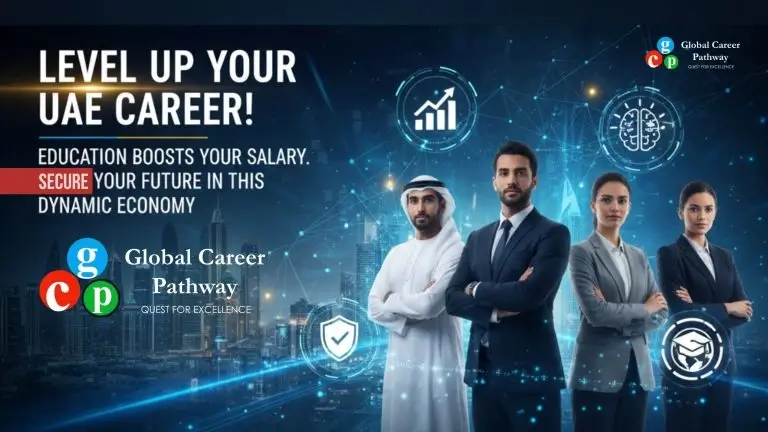
Importance of Education for Working Professionals in the UAE: In the heart of the Middle East, the United Arab Emirates (UAE) stands as a beacon of innovation, economic diversification, and global ambition. With initiatives like Vision 2031 and the UAE Centennial 2071, the nation is pivoting from oil dependency to a knowledge-based economy driven by technology, sustainability, and human capital. This blog explores why education matters for UAE professionals, backed by recent facts and figures, and concludes with actionable insights for your career journey. Career Advancement: Higher Earnings and Opportunities In a competitive job market like the UAEs, where sectors such as finance, tech, and tourism are booming, qualifications serve as a gateway to leadership roles and premium compensation. Consider the salary disparities tied to educational attainment. As of 2025, diploma holders in Dubai earn approximately 17% more than high school graduates, reflecting the premium placed on specialized skills. University graduates fare even better, with minimum wage benchmarks set nearly double that of skilled labors. Historical data reinforces this trend: professionals with a university degree earn around AED 120,000 annually, compared to AED 48,000 for those with secondary education. With the average monthly salary across Dubai hovering at AED 18,000 in 2025, investing in higher education can boost lifetime earnings by 20-50%, depending on the field. Moreover, the UAE’s corporate e-learning market is exploding, projected to grow from USD 1.51 billion in 2024 to USD 4.88 billion by 2030 at a 21.8% CAGR. This surge highlights how online MBAs, certifications in AI, and executive programs translate into promotions and international mobility, especially in hubs like Dubai and Abu Dhabi. Enhanced Employability: Navigating a Resilient Labor Market Data from 2023 shows unemployment among those with advanced education at just 2.659%—far below the national average. In contrast, while basic education unemployment stands at 1.232%, the broader trend favors tertiary qualifications: professionals with degrees are 10-15% more likely to secure roles in high-growth sectors like fintech and cybersecurity. The UAE’s overall unemployment rate has been declining steadily, thanks to Emiratization policies that prioritize skilled nationals, but expatriates too benefit from education-driven visas like the Golden Visa for top talent. Skill Development: Future-Proofing in a Tech-Driven Economy In 2025, top in-demand skills include AI (projected to create 1 million jobs by 2030), cybersecurity, and FinTech—fields where certified professionals command 20-30% salary premiums. The broader education market is set to expand by USD 5.1 billion from 2025-2029, fueled by short-term workshops and corporate training focused on digital upskilling. Flexible learning—via platforms like Coursera or local hubs—is making this accessible, with 70% of UAE organizations prioritizing employee development to boost engagement. Online education also fosters personal growth. For example, an online Executive MBA from reputable universities, business schools and colleges across the globe equips professionals with strategic skills while fitting around work commitments. Government Initiatives: A Supportive Ecosystem for Lifelong Learning The UAE government views education as a constitutional right and a pillar of national progress, investing heavily to empower professionals. Key programs include the Professional and Practical Training Programme, targeting Emirati students from grade 9 through higher education, blending academics with real-world experience. The Mohammed Bin Rashid School of Government’s Lifelong Learning Strategy equips graduates with ongoing scientific and practical knowledge. Initiatives like Teach for UAE attract global experts to the education sector, while the Gov Academy offers tailored training for public servants. Online Educational Programs: A Boost for Professional Profiles Online educational programs are a game-changer for UAE professionals, offering flexibility, affordability, and global recognition. These programs, ranging from micro-credentials to full degrees, allow working individuals to upskill without pausing their careers. For instance, a professional in Dubai can complete a Google Career Certificate in Data Analytics in 3-6 months, earning a credential recognized by UAE employers like Emirates Group. Similarly, online MBAs from local institutions or global platforms enhance resumes, signaling commitment to growth. These programs open doors to high-demand roles. For example, a 2025 LinkedIn report notes that 68% of UAE hiring managers prioritize candidates with recent certifications, particularly in tech and management. Online learning also supports Emiratization goals, as nationals can access specialized training to compete in private-sector roles. Expatriates benefit too, with online qualifications strengthening visa applications and job prospects in free zones like Dubai Internet City. Conclusion: Invest in Education, Shape Your UAE Legacy In summary, education is the ultimate catalyst for working professionals in the UAE. It drives higher salaries, bolsters employability, fuels skill development amid a USD 5.1 billion market boom, and is backed by visionary government strategies. For UAE professionals, the message is clear: start today. Enroll in an online certification, explore government-backed programs, or pursue an MBA—your next qualification isn’t just a credential; it’s your ticket to thriving in this extraordinary nation. About the Author Iqra is a dedicated Education Counsellor based in the UAE, passionate about empowering working professionals to recognize the transformative power of education in today’s fast-evolving era. With a mission to guide individuals toward lifelong learning, Iqra has crafted this blog to highlight the critical role of education, supported by comprehensive facts and figures. Through her work, she aims to inspire professionals to embrace upskilling and seize opportunities in the UAE’s dynamic economy.
Dhaneesh NP: Redefining Online Education for the MENA Generation while Building Bridges and Breaking Barriers
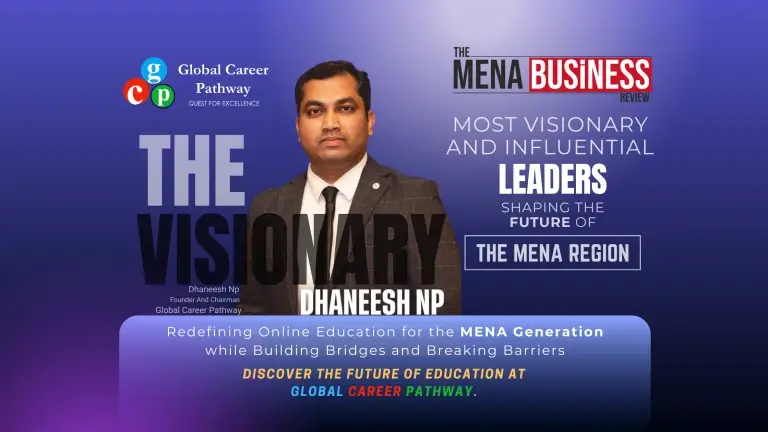
North Africa and the Middle East are at a pivotal historical juncture. With more than 60% of the population under 30, the area has untapped potential for human capital. However, conventional educational systems frequently fail to adequately prepare this youthful labour population for the needs of a global economy that is increasingly becoming more digital. For visionary leaders, the divide between tradition and innovation, between traditional teaching techniques and skills geared towards the future, presents both opportunities and problems. This demographic advantage only makes sense when combined with easily available, high-quality education that combines traditional values with modern skills. From the ancient educational institutions in Baghdad and Cairo to the contemporary educational programs throughout the Gulf, the region’s rich intellectual heritage offer a basis for change. However, leaders who comprehend the importance of preparing students for new and developing industries as well as the MENA culture’s respect for knowledge are necessary for success. Globalisation, technological development, and shifting workplace dynamics call for flexible, internationally accepted, and culturally authentic education strategies. In order to serve working professionals, people changing occupations, and lifelong learners from a range of backgrounds and industries, leaders in this field must find a balance between adherence to established principles and implementing innovative strategies. Dhaneesh NP is one of the few CEOs who best represents the dynamic blend of tradition and innovation in the rapidly evolving MENA region. As the Founder and Chairman – Global Career Pathway, he has positioned himself at the forefront of educational innovation, bridging the gap between modern learning expectations and cultural legacy. The Foundation of Leadership Dhaneesh NP’s journey to becoming a key figure in shaping the MENA region’s educational future began with a fundamental realization about the power of education. He understood early on that knowledge serves as the bridge to opportunity, not just for individuals but for entire communities. This insight shaped his worldview and motivated him to think beyond personal success toward building platforms that empower others. His path took a decisive turn when he transitioned into entrepreneurship. He identified critical gaps in the education ecosystem where young people weren’t receiving adequate preparation for future skill demands. Rather than waiting for systemic change, he chose to become an active catalyst for transformation. This decision marked the beginning of his mission to merge education with innovation. The entrepreneurial journey taught him valuable lessons in resilience and creativity. More importantly, it reinforced his belief that successful business ventures must align with meaningful purpose. He discovered that the most impactful initiatives emerge when profit motives combine with social responsibility. Philosophy of Empowerment What sets Dhaneesh NP apart as a leader is his fundamental philosophy about leadership itself. He believes that true leadership in education involves cultivating other leaders rather than creating followers. This principle guides every initiative he undertakes, from launching new programs to collaborating with global partners and mentoring students. His approach to measuring success differs from traditional metrics. He evaluates impact based on how many others he empowers along the way. This philosophy has shaped Global Career Pathway’s culture and operations, creating an environment where student success drives organizational achievement. The conviction that education and entrepreneurship serve as engines of transformation forms the cornerstone of his vision for the MENA region. He believes that inspiring youth to become problem solvers, innovators, and ethical leaders prepares them not just for the future but enables them to actively shape it. Translating Vision into Action Many recognize Dhaneesh NP as a visionary, but he understands that vision without execution remains merely a dream. His approach to translating bold ideas into actionable strategies involves three key components. First, he breaks down ambitious concepts into clear, measurable steps that align with real community needs. This methodical approach ensures that grand visions translate into practical solutions that address actual challenges. Second, he emphasizes collaboration as essential for meaningful transformation. He recognizes that no single leader or institution can drive comprehensive change alone. By bringing together world-class educators, globally recognized institutions, and entrepreneurs, he creates shared ownership and develops scalable solutions. Third, he advocates for starting small while making a big impact. His strategy involves implementing pilot programs and achieving early wins to build momentum. Once people witness tangible results, expanding successful initiatives becomes significantly easier. This approach enables the movement from aspiration to lasting change in the region. Balancing Heritage and Innovation The MENA region’s unique position presents both opportunities and challenges. Dhaneesh NP views the region’s dual identity of rich cultural heritage combined with a bold innovation appetite as its greatest strength. His leadership approach harmonizes these forces rather than treating them as opposing elements. He believes that cultural heritage provides essential values, including resilience, community spirit, and deep respect for knowledge. These values guide how innovation unfolds in the region. Simultaneously, innovation creates room for reimagining how traditional values can serve new generations through technology in education, entrepreneurial ventures, and global partnerships. In practice, this philosophy translates into designing initiatives that are forward-looking yet rooted in authenticity. When young people see that embracing innovation doesn’t require abandoning their identity, they gain confidence to lead with both pride and creativity. This balance enables regional progress without compromising cultural integrity. Strategic Vision for the Future Looking ahead 10 to 15 years, Dhaneesh NP identifies three key forces that will define the MENA region’s global position. First, the region’s youth demographic represents an unprecedented opportunity. With one of the world’s youngest populations, success depends on how effectively these young people develop skills which are relevant to the future. Second, digital transformation will reshape every sector. Organizations and regions that harness technology responsibly will emerge as leaders in the global economy. This presents particular opportunities for the MENA region, given its growing tech infrastructure and digital adoption rates. Third, sustainability will become a key marker of competitiveness. From renewable energy initiatives to comprehensive climate solutions, environmental responsibility will distinguish forward-thinking regions from those clinging to outdated models. These insights drive his current focus on building ecosystems where education, innovation, and entrepreneurship work
Successful DBA Orientation Session Conducted in Dubai
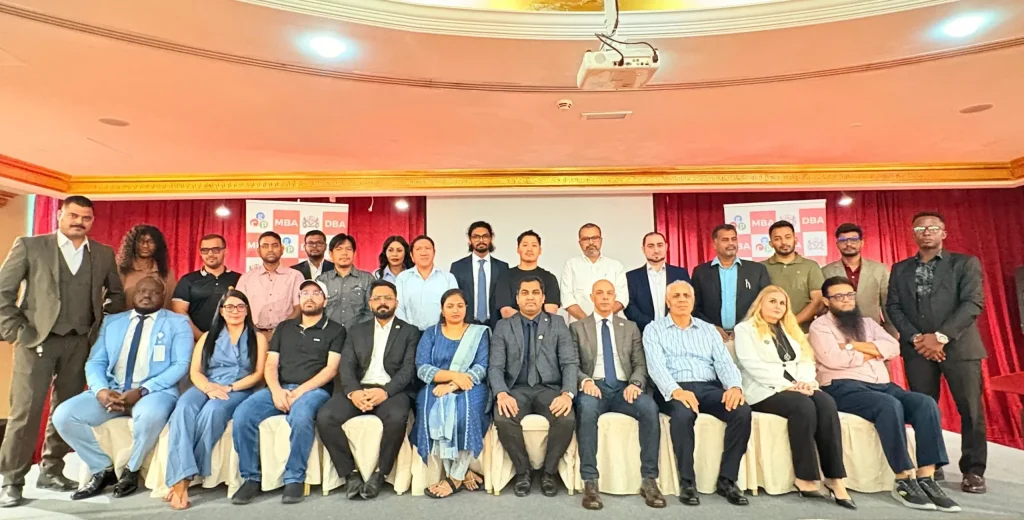
Global Career Pathway proudly hosted a DBA Orientation Session at the Grand Excelsior Hotel, Al Barsha – Dubai, marking the beginning of a new academic journey for our latest Doctorate in Business Administration (DBA) batch from RB College UK. The session was led by two distinguished academic leaders: The orientation served as an excellent platform for students to gain valuable insights into the DBA program structure, expectations, and future opportunities. Both speakers shared their expertise and perspectives on how a DBA can transform professional growth, leadership skills, and research capabilities. It was an engaging and interactive session, where students had the chance to connect directly with faculty, clarify their academic goals, and prepare for the exciting journey ahead. The event truly set a fruitful start for our new DBA batch, creating an inspiring atmosphere of learning and growth. At Global Career Pathway, we remain committed to guiding working professionals and aspiring leaders toward academic and career excellence.
Mental Health in the Workplace: TheGateway to Professional Success

IntroductionIn today’s demanding working world, mental health is no longer a private issue; it has become a vital part of professional life. Regardless of your field of work, be it finance, healthcare, engineering, or administration, your mental and emotional well-being significantly contributes to your thinking, relationships, and overall performance. When mental well-being is a priority, employees can handle challenges with greater focus, communicate more effectively, and recover more quickly from stress. Poor mental health, on the other hand, can make even the most competent professionals unmotivated, inattentive, and unhappy. The Growing Challenge of Burnout in the GCCMany employees across the Gulf Cooperation Council region are quietly battling burnout. Nearly 60 percent of employees in the region have mental health problems, with one in every three being burned out due to heavy workloads, tight deadlines, and lofty expectations. This issue is not only affecting individuals but also businesses. Studies indicate that unresolved mental illness is resulting in millions of lost workdays every year in the region, which translates to billions of dollars in lost productivity. This isn’t just a human issue, it’s an economic one. A PwC Middle East report found that untreated mental health conditions result in the loss of 37.5 million productive workdays annually, costing the region approximately $3.5 billion in lost output. The Role of Leadership in Encouraging Mental HealthOrganizational leadership is similarly a critical factor in addressing mental health. Effective leaders recognize that they have a responsibility to care for their staff members in addition to goal attainment. Realistic goal setting, encouragement instead of pressure, and constructive feedback instead of criticism are all methods of developing a working climate in which staff members feel valued and understood. Conversely, leadership styles that demand too much without support or fail to acknowledge employees’ struggles can quickly erode team morale and effectiveness. A culture of respect, empathy, and psychological safety must be cultivated. It allows employees to feel safe sharing their struggles and requesting assistance when they need it, and it ultimately renders the entire organization more resilient. Why Mental Health Is Key to SuccessMental well-being is not an afterthought but a core element of workplace success. Companies that invest in employees’ mental well-being benefit from: Employees do not only bring competencies to work; they bring emotional and mental lives. Companies that recognize and cultivate this human element build a healthier, more resilient workforce. ConclusionPrioritizing mental health in the workplace is not just the right thing to do, it’s also sound business. Businesses that invest in mental health create cultures of sustainable growth, innovation, and resilience. Mental health must be made a part of company culture, policy, and everyday leadership practice. That’s how businesses can unlock the full potential of their people and achieve long-term success.
Ready to Lead at the Top? Join Our Free DBA Awareness Seminar
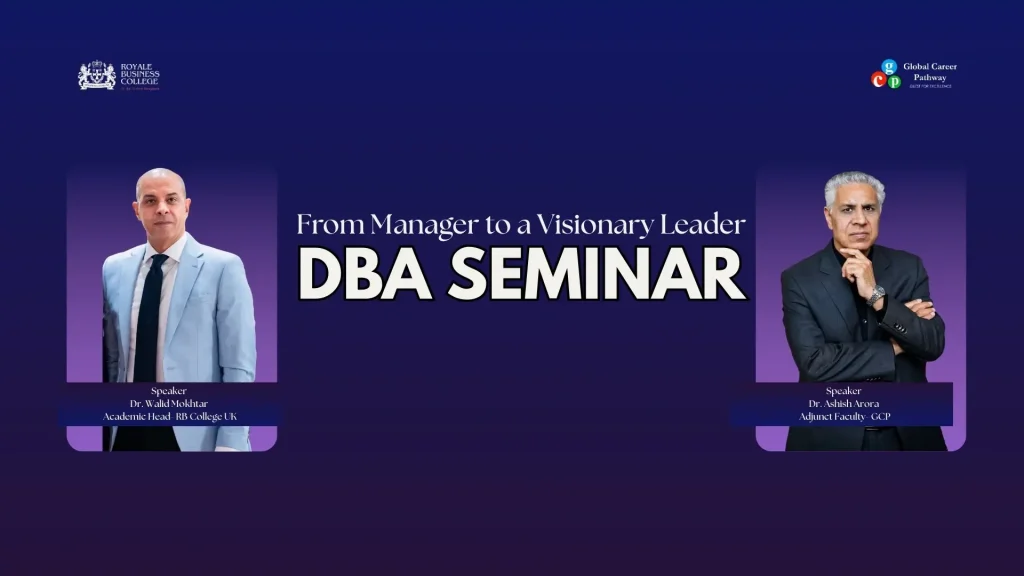
Are you aiming to move beyond management and step into the role of a visionary leader? A Doctorate in Business Administration (DBA) can be the catalyst that transforms your career, equipping you with the knowledge and confidence to influence industries, shape strategies, and establish yourself as a thought leader. To help you explore this transformative journey, we are hosting a Free DBA Awareness Seminar in Dubai. This is your opportunity to understand how a DBA can reshape your professional growth and open new doors to leadership opportunities. Event Details Featured Speakers Hear directly from distinguished experts in the field of business education: With their combined global expertise, they will guide you in understanding the value of a DBA and how it can align with your career aspirations. What You’ll Learn This interactive session will address key questions every working professional has when considering a DBA: Why Attend? The DBA is not just an academic achievement—it’s a career-defining step. Attending this seminar will give you practical insights, allow you to connect with experts, and help you decide if this program is the right fit for your long-term goals.
Introducing Our New Swiss Bachelor’s Program

We’re excited to announce the launch of our brand-new Swiss Bachelor’s Program, in collaboration with the prestigious Swiss School of Business Management, Geneva. Designed with the modern learner in mind, this fast-track program allows students to earn a globally recognized bachelor’s degree in just 12 months! Whether you’re a working professional seeking to upgrade your qualifications or a recent high school graduate looking for an international academic edge, this program is your pathway to success. 🌍 Why Choose This Swiss Bachelor’s Program? Duration: Complete in just 12 months Awarding Institution: Swiss School of Business Management, Geneva Global Recognition: Swiss degrees are respected worldwide for their quality and innovation Flexible Learning: Ideal for working professionals and students who prefer a focused, fast-paced academic journey Career-Oriented: Curriculum designed to align with real-world business needs and global industry standards 👨🎓 Who Can Apply? High school graduates Working professionals looking to gain a bachelor’s credential Students who have completed some college credits and want to fast-track their degree 💡 What Makes This Program Unique? Swiss Excellence: Get a taste of Switzerland’s world-renowned educational system without leaving your country Short Duration, Long-Term Value: A one-year bachelor’s degree that opens doors to international career and further study opportunities Industry-Relevant Curriculum: Developed by academic and industry experts to match current global market demands Ready to take the next big step in your career? 🚀 Apply now and become part of a global learning community that’s shaping tomorrow’s leaders.